
First They Came for the Whistleblowers: Govt Launches “Safety” Consultation After Corruption Leaks Embarrass Ministers
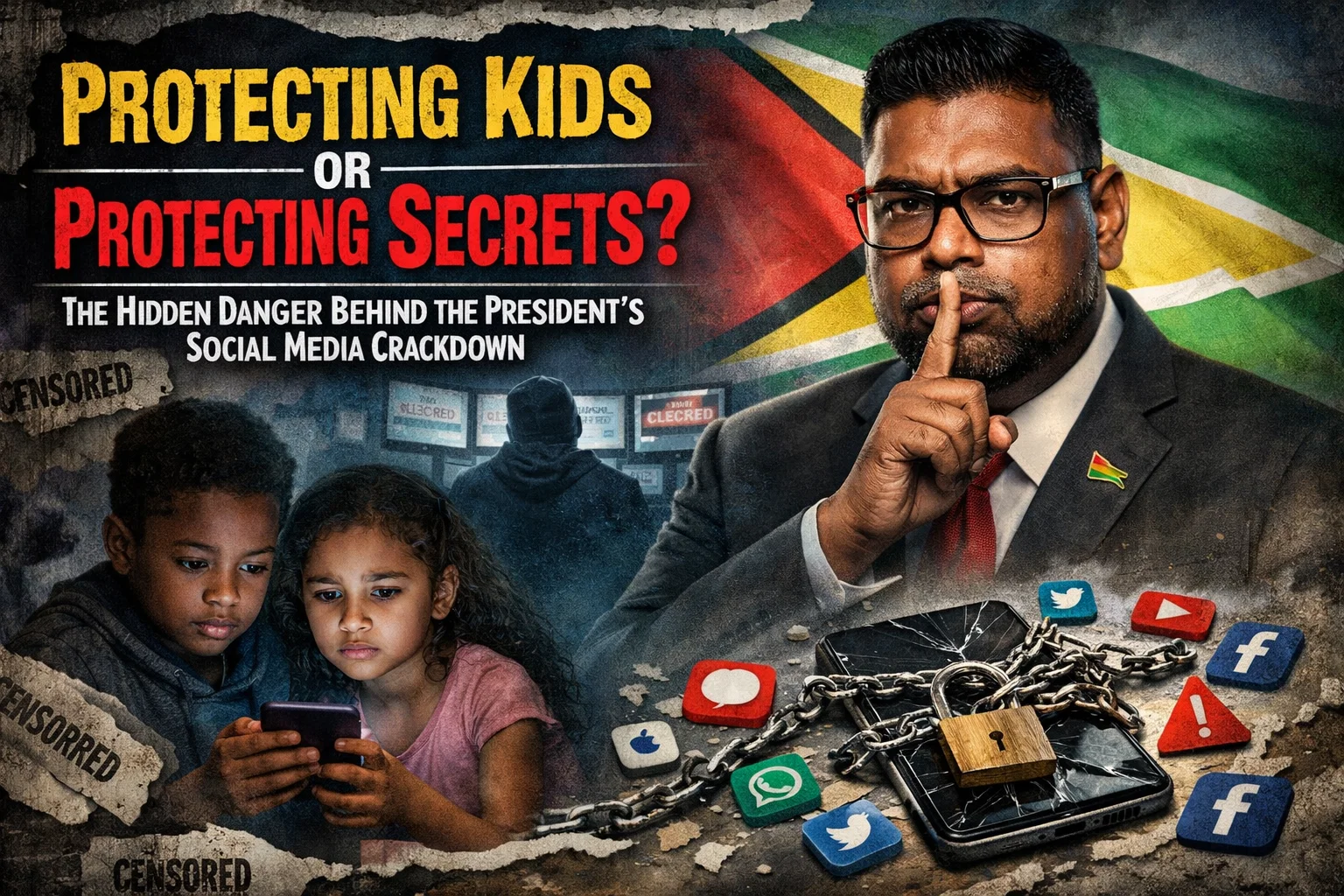
GEORGETOWN — It is the oldest trick in the authoritarian playbook: If you want to silence your critics, say you are doing it to “protect the children.”
This week, President Dr. Irfaan Ali announced that his government will launch a “national consultation” in January 2026 to address the “growing abuse of social media,” specifically focusing on its impact on children and screen time. But political observers and free speech advocates are sounding the alarm, warning that this initiative is less about pediatric health and more about tightening the digital noose around the necks of citizen reporters who have recently embarrassed the administration.
“Ninjas” and Narratives
In his address, the President painted a relatable picture of domestic struggles, sharing anecdotes of children “crawling into the room like ninjas” to steal back confiscated phones. He insisted that “social media is not the problem; it is the abuse of social media” and claimed the consultation is not about “restricting” platforms but finding “balanced solutions”.
However, the timing of this sudden pivot to “digital wellness” is suspicious. It comes on the heels of a disastrous month for the government, where social media—not state-controlled newspapers—was the primary vehicle for exposing alleged corruption.
Just days ago, drone footage and leaked documents circulating on TikTok and Facebook exposed the billion-dollar “Peter’s Hall Palace” allegedly owned by Minister Susan Rodrigues. The government was unable to kill the story because it spread peer-to-peer, bypassing traditional media gatekeepers. Now, the administration is conveniently “reviewing international case studies” from countries like Germany and the UK to regulate online spaces.
The Cybercrime Connection
Critics fear this consultation will serve as the justification for draconian amendments to the Cybercrime Act. Attorney General Anil Nandlall has already signaled the government’s intent to “protect citizens from social media slander,” describing unregulated social media as a “dangerous weapon”.
The roadmap is clear:
-
Step 1: Hold a “consultation” where handpicked groups agree that social media is “out of control.”
-
Step 2: Cite “public demand” to introduce laws that require verified IDs for social media accounts or hold platform admins liable for “misinformation.”
-
Step 3: Use these laws to unmask and prosecute anonymous whistleblowers and citizen journalists under the guise of “stopping cyberbullying.”
Silencing the “Pandemic”
President Ali has already adopted the language of censorship, referring to a global “pandemic of misinformation and disinformation”. In the government’s eyes, “misinformation” often translates to “information that makes us look bad.”
By conflating legitimate investigative leaks with “harmful content for children,” the government is setting a trap. Who would argue against protecting kids? But if the resulting policies allow the state to demand the removal of “harmful” posts, it won’t just be cartoons that get deleted—it will be drone footage of ministers’ mansions and receipts of questionable land deals.
As we head into the consultation phase, the public must remain vigilant. The government says they want to stop your child from becoming a “ninja” at night. The reality is they likely want to stop you from becoming a reporter during the day.