
“Justice Under Siege? The Azurdin Mohamed Case and the Weaponization of State Power in Guyana”
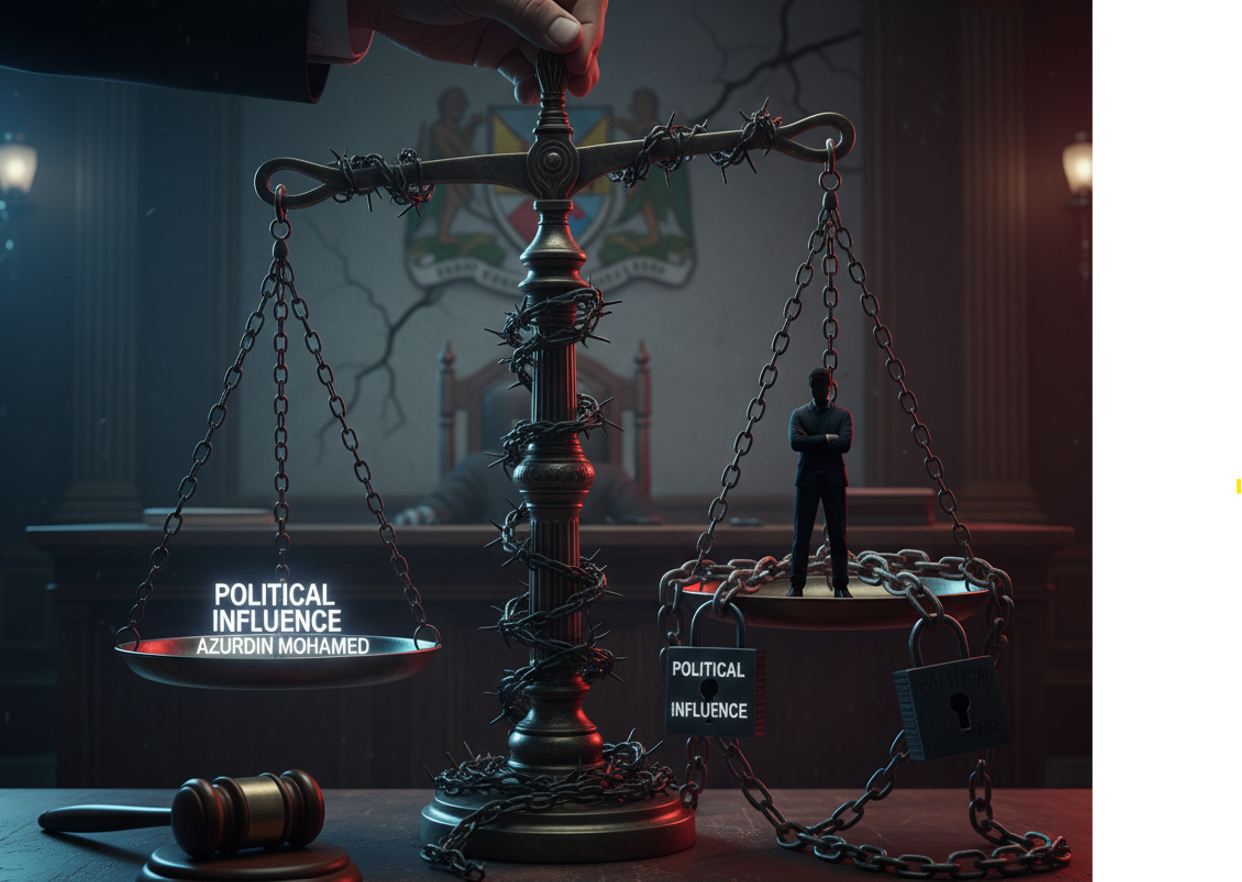
GEORGETOWN – The ongoing legal battles involving prominent businessman Azurdin Mohamed have ignited a firestorm of debate across Guyana, with critics alleging that the People’s Progressive Party/Civic (PPP/C) government has weaponized the Guyana Police Force (GPF) and the national justice system to target perceived opponents. This unfolding saga, many fear, not only highlights deeply entrenched corruption but also sets a dangerous precedent for the fundamental rights and freedoms of every Guyanese citizen.
Azurdin Mohamed, a figure well-known in business circles, has found himself entangled in a series of high-profile cases that have drawn scrutiny due to their perceived political undertones and the intensity of the state’s pursuit. While the specifics of the charges against Mohamed vary, the consistent theme, according to observers and legal analysts, is an aggressive and seemingly coordinated effort by state agencies.
Allegations of Weaponization
The core of the criticism centers on the contention that the Guyana Police Force, instead of acting as an impartial enforcer of the law, has become an instrument for political maneuvering. Reports from various sources, including opposition figures and some independent media outlets, suggest that investigations into Mohamed have been initiated and pursued with unusual zeal, often under circumstances that raise questions about due process and political influence.
For instance, critics point to the swiftness with which certain charges are brought, the nature of evidence presented, and the perceived selective application of the law. There are claims that the GPF has been used to harass, intimidate, and exert pressure, creating an environment where legal action is seen less as a pursuit of justice and more as a tool for political or economic subjugation.
The Justice System Under Scrutiny
Beyond the Police Force, the Guyana Justice System itself has come under intense scrutiny in the context of the Mohamed cases. Concerns have been raised about the independence of certain judicial processes and the potential for political interference to influence outcomes. While Guyana’s judiciary is constitutionally independent, instances of perceived pressure or influence can erode public trust.
The delays, postponements, and specific rulings in some of Mohamed’s cases have led some to question whether the scales of justice are truly balanced. When the public perceives that the courts are swayed by political considerations rather than strict adherence to the law, it undermines the very foundation of a democratic society where justice is meant to be blind.
The Shadow of Corruption
At the heart of these allegations lies the specter of corruption. The weaponization of state institutions against individuals often points to a deeper systemic issue where power can be abused for personal gain, political vendettas, or to protect vested interests. If the police and justice system can be co-opted, it suggests a profound vulnerability to corruption that can permeate all levels of governance.
Such corruption is not merely about illicit financial transactions; it extends to the subversion of institutional integrity. When law enforcement and the judiciary can be manipulated, it sends a chilling message that power, not law, dictates outcomes.
What This Means for the Typical Guyanese
The implications of the Azurdin Mohamed case, if the allegations hold true, are far-reaching and deeply unsettling for the average Guyanese citizen.
-
Erosion of Trust in Institutions: When state institutions like the police and judiciary are seen as tools of political power rather than impartial bodies, public trust in these essential pillars of democracy collapses. This can lead to disillusionment and a sense that justice is unattainable for ordinary citizens.
-
Threat to Rule of Law: The principle of the rule of law dictates that everyone is equal before the law, and that laws are applied consistently and fairly. If political influence can dictate who is targeted and how they are prosecuted, the rule of law is severely undermined, leading to an environment of legal uncertainty and fear.
-
Suppression of Dissent and Opposition: A weaponized justice system can be used to silence critics, suppress political opposition, and discourage legitimate dissent. If individuals fear that speaking out or acting against the government’s interests could lead to legal harassment, it stifles free speech and democratic participation.
-
Economic Instability: For investors and entrepreneurs, a justice system perceived as corrupt or politically compromised creates an unstable business environment. This can deter investment, hinder economic growth, and ultimately impact job creation and prosperity for all Guyanese.
-
Rise of Impunity: If powerful figures can manipulate the system, it fosters a culture of impunity where those with connections believe they are above the law, while ordinary citizens face the full, often harsh, force of the state.
The Azurdin Mohamed case, regardless of its ultimate legal outcome, has brought to the forefront critical questions about governance, accountability, and the integrity of Guyana’s key state institutions. It serves as a stark reminder that a healthy democracy relies not only on elections but also on robust, independent, and impartial systems of law enforcement and justice that serve all citizens equally, without fear or favour. The challenge for Guyana is to address these concerns head-on, ensuring that justice is truly for everyone, and not just a select few.