
Billions for Contractors, Nickels for Kids: Analyzing the 2026 Student Grant Shortfall In Budget
GEORGETOWN, Guyana — When the finance minister stood before the National Assembly to unveil the historic $1.558 trillion 2026 National Budget, many Guyanese parents tuned in with bated breath. They weren’t listening for the billion-dollar allocations for bridges or gas plants; they were listening for the $200,000 promise.
During the heat of the 2025 election campaign, the narrative was clear: the oil wealth was finally going to reach the pockets of every household, starting with the children. The promise of a $200,000 “Because We Care” grant per child was the cornerstone of the government’s pitch to the working class.
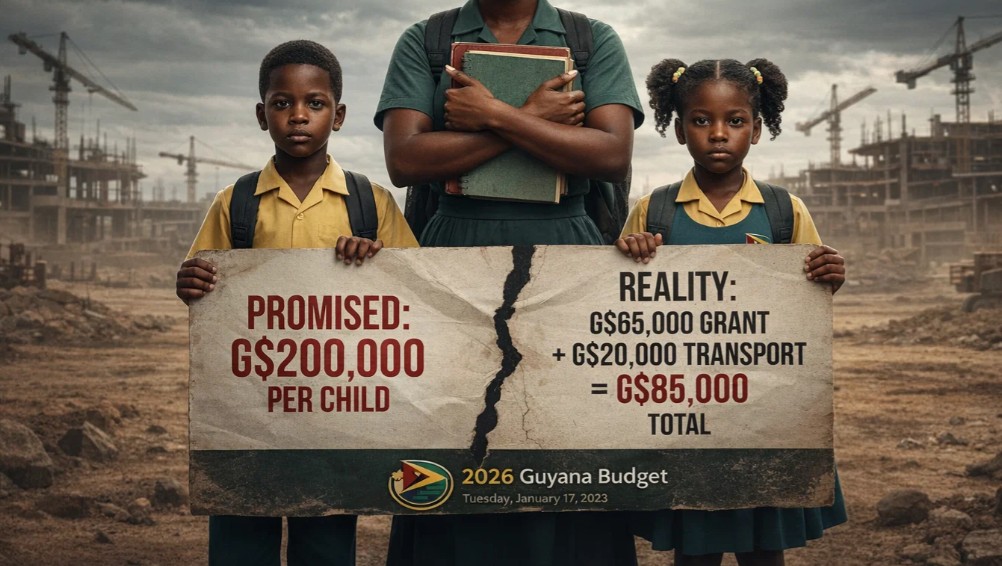
However, as the dust settles on the 2026 fiscal plan, the reality is a cold shower for Guyanese families. Instead of the promised $200,000, the budget has delivered a combined total of just $85,000—comprising a $65,000 cash grant and a $20,000 transportation allowance.
The Math of Disappointment
For a mother with three children, the difference between what was promised and what was delivered is a staggering $345,000. In an economy where the cost of living has skyrocketed and the price of basic food items continues to climb, this is not just a statistical discrepancy—it is a survival gap.
“They used our children as campaign posters,” said one frustrated parent outside a Georgetown primary school. “We were told the oil money meant we wouldn’t have to struggle for uniforms and books this year. $85,000 is helpful, but it isn’t what they looked us in the eye and promised.”
Infrastructure Over Individuals?
Critics, including the newly elected Opposition Leader Azruddin Mohamed and members of the APNU, have been quick to point out the hypocrisy of a $1.5 trillion budget that finds billions for “concrete and steel” but “nickels and dimes” the nation’s youth.
The government argues that the $85,000 is a “significant increase” from previous years and that the remaining oil wealth is being “reinvested” into long-term infrastructure. But the counter-argument is simple: a child cannot eat a bridge, and a student cannot pay for lessons with a new highway.
By failing to meet the $200,000 threshold, the administration has handed the opposition a powerful weapon. The narrative of “broken promises” is already taking root, with many accusing the PPP/C of “bait and switch” tactics to secure the September 2025 vote.
The Inflation Factor
What makes the $85,000 figure even harder to swallow is the current rate of inflation. The purchasing power of $85,000 in 2026 is vastly different from what it was just two years ago. With global supply chain issues and high local demand, parents find that school supplies, technology for classrooms, and healthy meals cost nearly double what they used to.
If the government can afford to subsidize a failing GuySuCo to the tune of $13 billion and allocate hundreds of billions to massive infrastructure contracts that often benefit a select few, the question must be asked: Why was the $200,000 promise the first one to be trimmed?
A Credibility Crisis
A budget is more than just a ledger of income and expenditure; it is a statement of values. By prioritizing massive capital projects over the direct, promised relief for Guyanese families, the government risks a serious credibility crisis.
As the budget debates continue, the people of Guyana are left wondering: if the largest budget in our history cannot fulfill a promise to our children, who exactly is this “historic” wealth for?