
“Democracy Under Assault”: Guyana Faces Constitutional Crisis as President Swears in TSC in Legal Vacuum
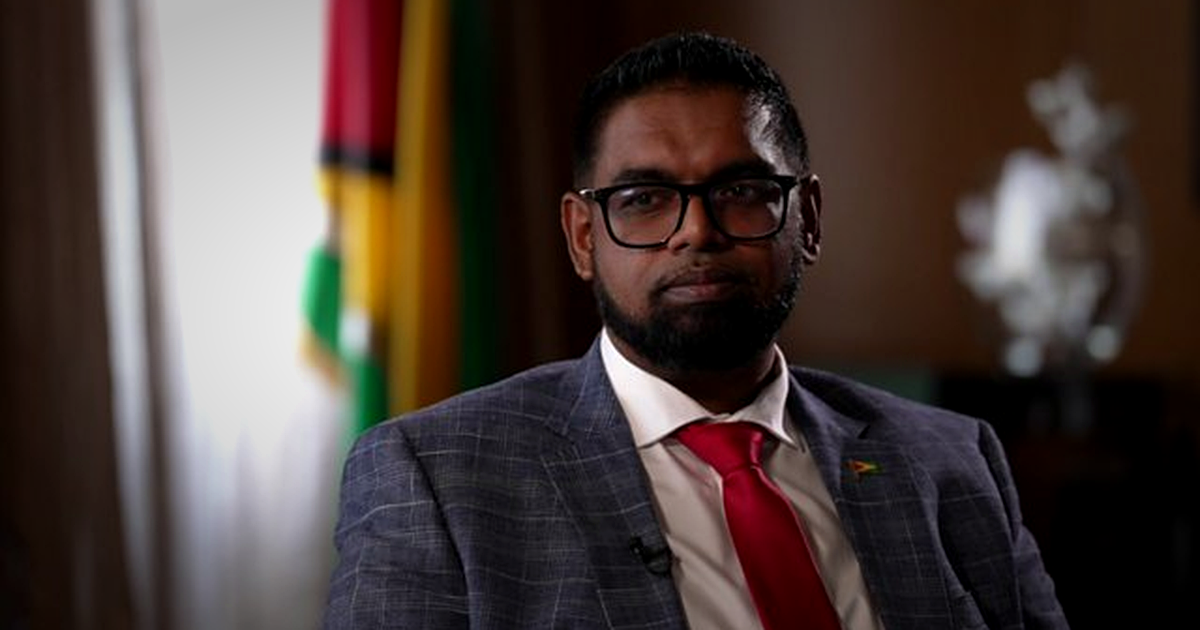
GEORGETOWN — In a move that critics are calling a “direct assault on parliamentary democracy,” President Irfaan Ali has proceeded with the appointment and swearing-in of members of the Teaching Service Commission (TSC) without the constitutionally mandated consultation with the Leader of the Opposition.
The decision has sparked immediate condemnation from the parliamentary opposition, who argue that the President’s actions flagrantly violate the supreme law of the land and further erode Guyana’s democratic institutions. By bypassing the requirement for consensus, the government is accused of entrenching executive control over independent commissions and normalizing a “constitutional vacuum.”
The Constitutional Breach
At the heart of the controversy is Article 207 of the Constitution of Guyana, which outlines the specific procedure for appointing the Teaching Service Commission. The Constitution is explicit: the President does not have unilateral power to handpick all members of this critical body.
Article 207 (2) states:
“The members of the Commission shall be appointed as follows— (a) three members shall be appointed by the President, acting after consultation with the Minority Leader [Leader of the Opposition]…”
The opposition contends that this requirement for “meaningful consultation” is not merely a suggestion but a “fundamental safeguard designed to preserve the independence, credibility, and balance of constitutional commissions.” By proceeding without a Leader of the Opposition in place—and by extension, without consultation—the President has effectively stripped the Commission of its bipartisan legitimacy.
“Grave Concern” and “Democratic Erosion”
In a strongly worded press statement released immediately following the appointments, the opposition expressed “grave concern” over the government’s trajectory. They argue that the absence of a Leader of the Opposition is a manufactured crisis, blaming the Speaker of the National Assembly for refusing to convene a meeting to elect a new leader.
“This requirement [for consultation] is neither symbolic nor optional,” the statement read. “The resulting absence of a Leader of the Opposition is therefore not incidental. It is the product of deliberate inaction and cannot be used to justify the circumvention of express constitutional obligations.”
The opposition warned that this move mirrors “authoritarian tendencies rather than democratic accountability,” accusing the Ali administration of treating constitutional compliance as a “matter of convenience rather than principle.”
Chaos in the Education Sector
The implications of this standoff extend deep into the nation’s schools. The opposition highlighted a troubling pattern over the last two years where, in the absence of a functioning TSC, the government allegedly bypassed standard protocols to fill senior positions.
According to the statement, “numerous individuals were administratively placed into senior and leadership positions in schools without published vacancy lists, transparent selection processes, or formal appointments issued by the Commission.”
These “administrative measures,” critics argue, undermine meritocracy and damage professional morale among teachers who have seen no senior promotions since May 2023. By reconstituting the TSC through a flawed process, the government is accused of trying to retroactively validate these irregular appointments rather than fixing the systemic rot.
A Call to Action
The opposition has declared the new appointments to be void of “constitutional legitimacy” and is calling on civil society, trade unions, and the international community to intervene.
“We call on educators, civil society, trade unions, the legal community, and international partners to take note and to speak out in defence of constitutional governance and democratic norms,” the statement concluded.
As the government moves forward with its handpicked Commission, the shadow of unconstitutionality looms large, threatening to deepen the political divide and further damage public trust in the rule of law.