
Oversight Under Scrutiny: Growing Evidence of “Price Padding” in National Tender Projects
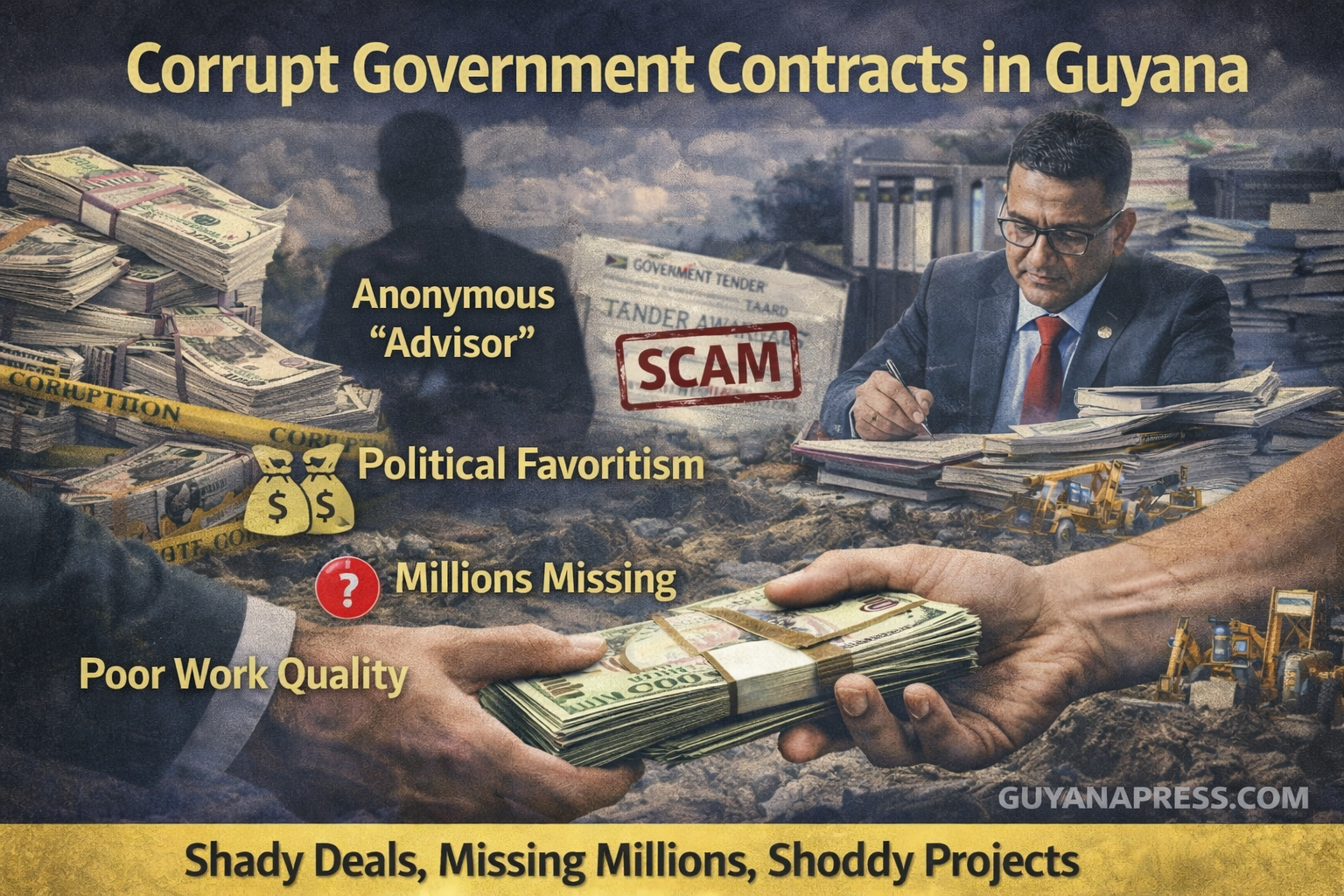
Georgetown, Guyana – A troubling pattern of “rehabilitation” projects, marked by inflated costs, incomplete work, and rapid deterioration, is emerging across Guyana, raising serious concerns about procurement transparency and accountability in the nation’s burgeoning infrastructure sector. Critics point to several high-profile examples where initial project costs are quickly dwarfed by subsequent “rehabilitation” phases, often just months after commissioning, prompting accusations of widespread mismanagement and potential corruption.
This pattern is particularly alarming as Guyana experiences an unprecedented inflow of oil revenue, leading to a surge in public works projects. While the government emphasizes its commitment to modernizing the country, the repeated need for costly “rehab” on newly completed structures suggests systemic issues within the procurement and oversight mechanisms.
The Charity Police Station Fence: A Striking Example
The planned 74.385 million perimeter fence for the recently reconstructed Charity Police Station in Region Two has become a flash point for this concern. The station itself was commissioned in July 2025 at a cost of 62.7 million. Less than six months later, the Ministry of Home Affairs is moving to construct a fence whose estimated cost significantly exceeds the entire building.
“It defies logic,” stated a local governance advocate who wished to remain anonymous due to fear of reprisal. “How can a fence cost more than the state-of-the-art facility it’s supposed to protect? This immediately signals a problem in how estimates are being generated and contracts awarded.”
Leonora Fire Station: Rehabilitation Shortly After Commissioning
Another case drawing scrutiny is the Leonora Fire Station. Commissioned in July 2025 at a cost of 159 million, the government is already tendering for an additional 19 million for its “rehabilitation and furnishing” only months after its official opening. This rapid need for significant additional funds suggests either poor initial planning, substandard construction, or deliberate underestimation of initial costs to secure a contract, followed by an inevitable “rehab” phase.
Belle Vue Pump Station: Millions Disbursed, Minimal Work
Perhaps one of the most egregious examples involves the Belle Vue Pump Station. This 800 million project saw contractor Tepui Group receive nearly 182 million in disbursements for an estimated 10% completion of the work. A Public Procurement Commission (PPC) investigation into this project found multiple violations of procurement rules, highlighting a critical breakdown in oversight. Such instances not only waste taxpayer money but also delay essential services for communities.
Wider Implications: Shoddy Work and Inflated Prices
The issue extends beyond these specific projects. In Region Two, local farmers in the Pomeroon have consistently complained that drainage and irrigation works, often awarded to contractors from outside the immediate area, frequently fail during the first heavy rainfall. This suggests a systemic problem where contracts may be awarded based on factors other than a proven track record of quality and efficiency.
The pattern points to several potential problems:
- Inflated Engineer’s Estimates: Government-generated estimates for projects appear to be consistently higher than market rates, creating opportunities for inflated bids.
- Poor Contractor Vetting: Contracts may be awarded to companies lacking the necessary experience or capacity, leading to substandard work.
- Inadequate Oversight: A lack of rigorous supervision during construction allows for shortcuts and incomplete work, necessitating subsequent “rehabilitation.”
- Lack of Accountability: Despite public outcry and formal investigations, there is often a perceived lack of consequences for contractors or officials involved in problematic projects.
Official Response and Calls for Greater Transparency
The government maintains that it is committed to rooting out corruption and ensuring value for money. Senior officials often attribute issues to “legacy problems” or “contractor inefficiencies,” promising tighter controls. However, critics, including opposition parties and civil society organizations, argue that rhetoric must be matched by concrete actions.
They are calling for:
- Enhanced Due Diligence: More thorough checks on contractors’ financial capacity and track record.
- Independent Audits: Regular, independent audits of major infrastructure projects.
- Stronger Enforcement: Stricter penalties for contractors who fail to deliver on specifications and for officials who neglect oversight.
- Public Access to Information: Greater transparency in bidding processes, contract details, and project progress reports.
As Guyana navigates its oil-driven economic boom, the effective and transparent management of public funds for infrastructure development remains a critical test of good governance. The recurring “rehab” scam pattern threatens to undermine public trust and squander the nation’s newfound wealth on projects that fail to deliver lasting value.